
Cracking the IT Spend Code: Why Visibility Is the CIO’s Superpower
As every enterprise becomes digital at its core, CIOs gain their greatest leverage not through spending more, but through seeing more

The Modern CIO Dilemma: Too Much Spend, Too Little Clarity
IT budgets have never been higher. Yet for many CIOs, clarity on where and why that money is spent remains elusive.
Cloud services are multiplying. SaaS subscriptions proliferate. Shadow IT quietly expands. Before long, what once seemed like a structured IT budget turned into a tangled web of invoices, licenses, and vendor contracts — each managed by different teams in different systems.
The result?
CIOs are forced to answer critical financial questions with fragmented, outdated, or incomplete data.
So, when the CEO asks, “How does this IT investment drive business value?” — hesitation often follows. Not due to a lack of insight, but because the data itself doesn’t speak in one unified language.
Visibility Isn’t About Numbers — It’s About Control
Visibility is often mistaken for reporting. In reality, it’s the foundation of strategic control.
Traditional reporting tells you what was spent
Visibility tells you why it was spent, who benefited, and what value it created.
When CIOs achieve this level of insight, the conversation shifts:
- From “How much are we spending on cloud?”
→ To “Which business services deliver the most value from our cloud investments?” - From “Can we reduce costs?”
To “Can we reallocate spend to fuel innovation?”
Visibility transforms IT finance from a passive accounting function into an active steering mechanism — one that drives business outcomes.
The Three Pillars of IT Spend Visibility
Based on Altios research with enterprise CIOs, three core enablers define true IT spend visibility:
1.Unified Data Foundation
Disparate data is the enemy of clarity.
Financial systems, procurement tools, and IT operations all speak different “languages.” Visibility demands translation.
A unified spend platform consolidates these views, normalizes data, and links costs directly to business services. The outcome?
A single source of truth that connects dollars to decisions.
2.Service-Based View of Spend
Visibility becomes powerful when spend is aligned to services — not cost centers.
Instead of tracking spend by department or vendor, leading CIOs map IT costs to the services they enable: collaboration, analytics, customer experience, infrastructure, and more.
This approach reveals the true cost-to-serve and helps evaluate whether spend levels are proportionate to business value.
3.Continuous Insights, Not Periodic Reports
Quarterly or static reporting belongs to the past.
Modern CIOs need real-time dashboards and predictive insights that surface trends before they escalate — whether it’s a sudden cloud spike, a redundant SaaS subscription, or an underutilized infrastructure service.
Continuous visibility enables proactive governance, not reactive firefighting.
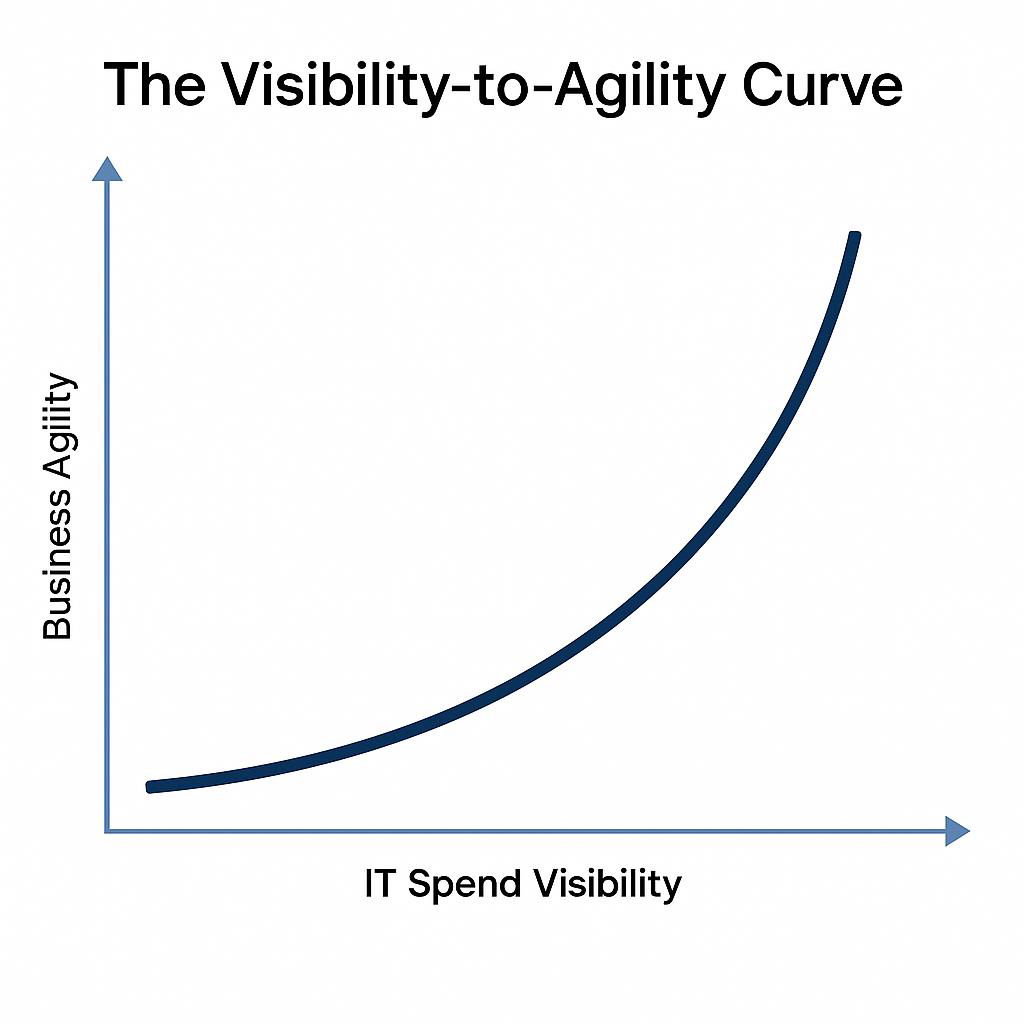
The Business Payoff: Visibility = Agility
CIOs who achieve high visibility don’t just gain control — they gain agility.
| Visibility Benefit | Strategic Impact |
|---|---|
| Faster decisions through real-time spend data | Shorter budget cycles and quicker market response |
| Aligned IT and Finance functions | Greater trust and transparency across leadership |
| Optimized resource allocation | More funding redirected toward innovation and growth |
| Predictive spend forecasting | Reduced financial risk and improved budget accuracy |
| Data-driven IT storytelling | Stronger board influence and strategic credibility |
In short, visibility turns IT from a cost center into a value engine.
From Visibility to Value: The CIO’s Next Frontier
Visibility is the first — not the final — step. The next frontier is translating insight into action: automated cost optimization, scenario planning, and data-driven investment strategies.
Forward-thinking CIOs are already adopting platforms like Altios, which unify data, map services, and apply predictive analytics to help technology leaders see, understand, and steer IT spend in real time.
With the right visibility framework, CIOs can finally answer the board’s toughest question:
“How does our technology investment drive business growth?”
Five Questions Every CIO Should Ask Today
- Can I view our full IT spend across cloud, SaaS, and on-prem — in one place?
- How much of our spend directly supports revenue-generating services?
- Are there hidden costs or duplications across business units?
- Can we forecast next quarter’s IT run rate with confidence?
- What percentage of our IT budget is aligned to strategic priorities, not maintenance?
If any of these answers are uncertain, it’s time to make visibility a leadership priority, not a reporting task.
Conclusion: The Visibility Advantage
CIOs who crack the IT spend code don’t just manage costs — they command influence.
They turn financial data into strategic intelligence, empowering their organizations to make faster, smarter, and more impactful technology decisions.
In today’s digital economy, visibility isn’t just power — it’s the CIO’s superpower.
About Altios
Altios helps CIOs and IT finance leaders transform complex spend data into actionable insights. Through unified visibility, service-aligned modeling, and real-time analytics, Altios enables IT organizations to move from reporting to steering — with clarity, confidence, and control.